
Robotic Joint Motors
BXI5014-19
The lightest model in the lineup: 25 N·m peak at just 0.5 kg for minimal end-joint inertia
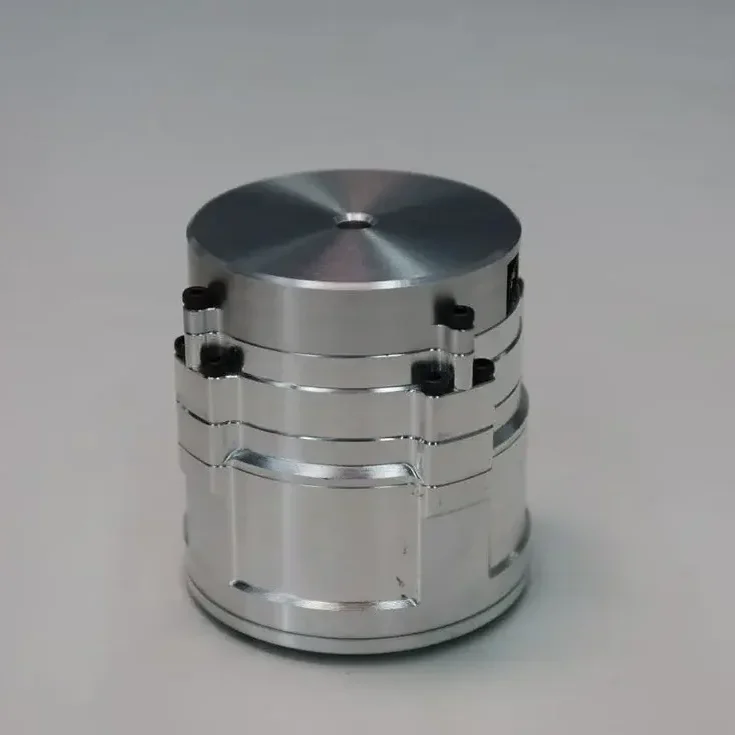
The BXI5014-19 is the lightest joint motor in the BXI lineup at 0.5 kg, rated 7 N·m with a 25 N·m peak — made for the most inertia-sensitive joints such as wrists, necks, and head axes.
It shares the 64 mm diameter and 6 mm hollow bore of the 5018 at a lower 66.5 mm height, with the same dual absolute encoders and cross-roller bearing. It powers the head and distal arm joints of the Elf 3 humanoid.
Motor Technical Specifications
| Rated torque | 7 N·m |
|---|---|
| Peak torque | 25 N·m |
| Rated voltage | 24–48 V |
| No-load speed | 200 rpm |
| Rated output speed | 100 rpm |
| Peak phase current | 30 A |
| Reduction ratio | 19.5 |
| Weight | 0.5 kg |
| Installation diameter | 64 mm |
| Height | 66.5 mm |
| Hollow bore | 6 mm |
| Encoders | Dual absolute (magnetic input + inductive output) |
| Bearing | Cross-roller bearing |
| Communication | CAN / CANFD |
Detailed parameters across the joint motor lineup (theoretical values; actual values vary by operating conditions).
Typical Applications
- Humanoid neck, head, and wrist joints
- Dexterous wrist and end-effector actuation
- Weight-critical mobile and wearable platforms
Frequently Asked Questions
What are the BXI5014-19 specifications?
7 N·m rated / 25 N·m peak torque, 0.5 kg, 64 mm diameter, 66.5 mm height, 6 mm hollow bore.
Is 25 N·m of peak torque enough?
For light joints like wrists and necks, yes: size continuous holds against the 7 N·m rating and cover transient swings with the 25 N·m peak. Step up to the 5018 or 7010 for more.
What communication and control does it support?
Same as the whole lineup: CAN/CANFD with MIT protocol, mixed torque/velocity/position control, and 1 KHz control loops when paired with the PCIE-CAN control module.