
Robotic Joint Motors
BXI7010-19
70-series mid-torque joint motor: 50 N·m peak at 0.8 kg — the balanced choice for shoulders and elbows
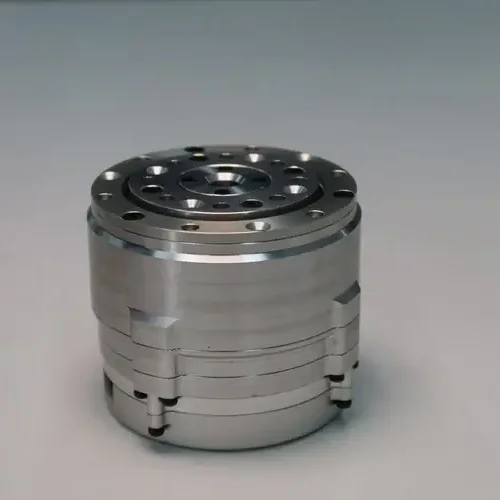
The BXI7010-19 is the 70-series hollow-shaft planetary joint motor, rated 15 N·m with a 50 N·m peak at just 0.8 kg — balancing torque against weight for humanoid arm joints such as shoulders and elbows.
Its 9 mm hollow bore routes cabling inside the arm, while dual absolute encoders and a cross-roller bearing deliver closed-loop precision and joint stiffness. It shares the 19.5 reduction ratio and CAN/CANFD communication of the 85/50 series, so a whole robot can run on one unified bus.
Motor Technical Specifications
| Rated torque | 15 N·m |
|---|---|
| Peak torque | 50 N·m |
| Rated voltage | 24–48 V |
| No-load speed | 200 rpm |
| Rated output speed | 100 rpm |
| Peak phase current | 60 A |
| Reduction ratio | 19.5 |
| Weight | 0.8 kg |
| Installation diameter | 81 mm |
| Height | 68 mm |
| Hollow bore | 9 mm |
| Encoders | Dual absolute (magnetic input + inductive output) |
| Bearing | Cross-roller bearing |
| Communication | CAN / CANFD |
Detailed parameters across the joint motor lineup (theoretical values; actual values vary by operating conditions).
Typical Applications
- Humanoid shoulder and elbow joints
- Mid-chain joints of collaborative robot arms
- Mid-size quadruped legs and hip/knee joints of powered exoskeletons
- High-DOF systems balancing torque and weight
Frequently Asked Questions
What are the torque and weight of the BXI7010-19?
15 N·m rated, 50 N·m peak, 0.8 kg weight, 81 mm installation diameter.
Why choose it for arm joints?
Shoulders and elbows carry arm payload while dominating arm inertia: the 50 N·m peak covers dynamic manipulation and the 0.8 kg mass keeps whole-arm inertia low.
BXI7010-19 vs BXI8515-19 — how to decide?
By torque tier: joints holding over 15 N·m continuous or 50 N·m peak need the 8515; for mid-torque arm joints, the 7010 is lighter with a smaller diameter.