
Robotic Joint Motors
BXI8515-19
85-series high-torque joint motor: 150 N·m peak, built for humanoid hip and knee joints
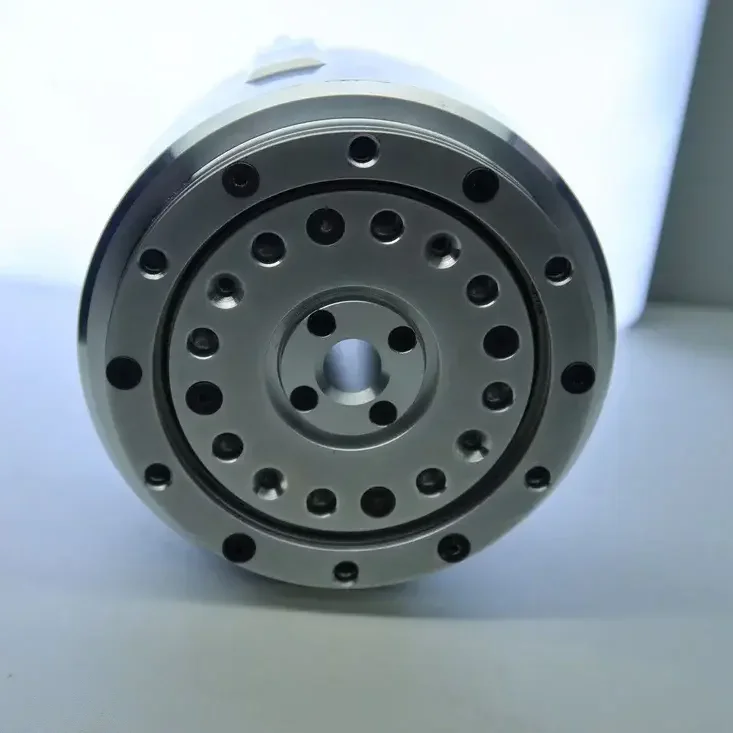
The BXI8515-19 is the largest actuator in the BXI hollow-shaft planetary joint motor lineup, delivering 40 N·m rated and 150 N·m peak torque for load-bearing humanoid joints such as hips and knees.
It combines a 19.5 planetary reduction ratio and a 10 mm hollow bore with dual absolute encoders (magnetic input + inductive output) and a cross-roller bearing, measuring true output angle directly for precise closed-loop control and zero-calibration startup. It is validated under extreme conditions as the load-bearing leg joint of the Elf 3 humanoid robot.
Motor Technical Specifications
| Rated torque | 40 N·m |
|---|---|
| Peak torque | 150 N·m |
| Rated voltage | 24–48 V |
| No-load speed | 200 rpm |
| Rated output speed | 100 rpm |
| Peak phase current | 90 A |
| Reduction ratio | 19.5 |
| Weight | 1.4 kg |
| Installation diameter | 99 mm |
| Height | 73 mm |
| Hollow bore | 10 mm |
| Encoders | Dual absolute (magnetic input + inductive output) |
| Bearing | Cross-roller bearing |
| Communication | CAN / CANFD |
Detailed parameters across the joint motor lineup (theoretical values; actual values vary by operating conditions).
Typical Applications
- Humanoid robot hip and knee joints and other load-bearing axes
- Quadruped robot (robot dog) leg actuation
- High-dynamic joints requiring >100 N·m transient torque
Frequently Asked Questions
What torque does the BXI8515-19 deliver?
40 N·m rated (continuous) and 150 N·m peak (transient), with a 19.5 reduction ratio.
Which joints suit the BXI8515-19?
Load-bearing humanoid joints such as hips and knees: size continuous loads against the 40 N·m rating and cover impacts and dynamic swings with the 150 N·m peak.
What drive current does it need?
Peak phase current is 90 A on a 24–48 V bus — size the power supply and driver accordingly. Communication is CAN/CANFD with MIT protocol support.