
Robotic Joint Motors
BXI5018-19
50-series lightweight joint motor: 35 N·m peak at 0.55 kg — low inertia for wrists and end joints
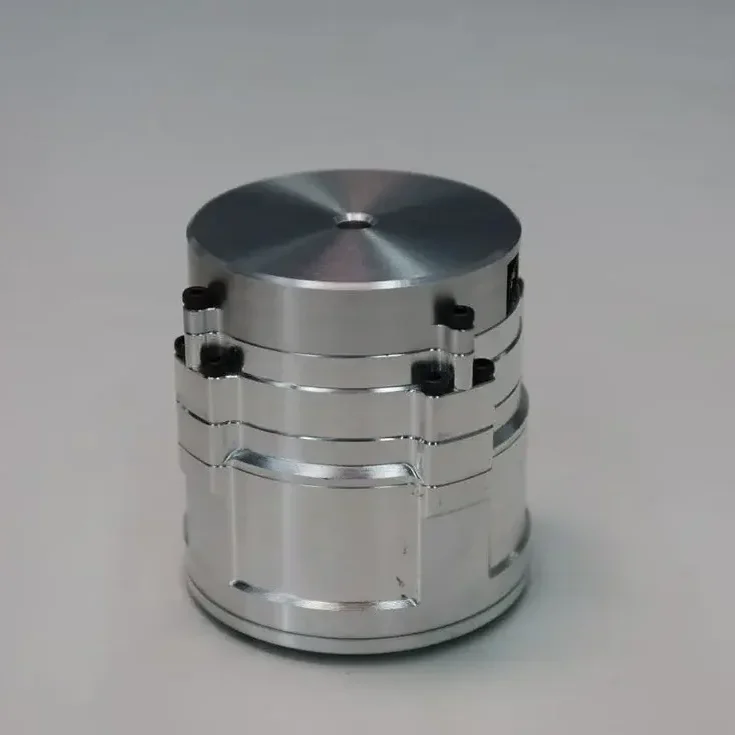
The BXI5018-19 is the higher-torque model of the 50 series: 11 N·m rated, 35 N·m peak, at only 0.55 kg and a 64 mm installation diameter — built to keep inertia low in wrist and distal joints.
The closer a joint sits to the end effector, the more its mass costs in dynamic response and energy. The 5018 keeps 35 N·m of peak torque with full dual absolute encoders and a cross-roller bearing inside 0.55 kg, so end-of-arm precision is never compromised.
Motor Technical Specifications
| Rated torque | 11 N·m |
|---|---|
| Peak torque | 35 N·m |
| Rated voltage | 24–48 V |
| No-load speed | 200 rpm |
| Rated output speed | 100 rpm |
| Peak phase current | 30 A |
| Reduction ratio | 19.5 |
| Weight | 0.55 kg |
| Installation diameter | 64 mm |
| Height | 70.5 mm |
| Hollow bore | 6 mm |
| Encoders | Dual absolute (magnetic input + inductive output) |
| Bearing | Cross-roller bearing |
| Communication | CAN / CANFD |
Detailed parameters across the joint motor lineup (theoretical values; actual values vary by operating conditions).
Typical Applications
- Humanoid wrist joints and forearms
- Distal joints of lightweight robot arms
- Lightweight joints of exoskeletons and wearable robots
- Dexterous manipulation platforms with low-inertia requirements
Frequently Asked Questions
What are the BXI5018-19 specifications?
11 N·m rated / 35 N·m peak torque, 0.55 kg, 64 mm diameter, 6 mm hollow bore, 30 A peak phase current.
How does it differ from the BXI5014-19?
Same 50 series and 64 mm diameter: the 5018 offers more torque (35 vs 25 N·m peak) at 50 g more weight and 4 mm more height — pick by end-joint torque demand.
Why do end joints need light motors?
Distal mass is amplified by leverage into whole-arm inertia, slowing dynamics and raising energy cost; at 0.55 kg the 5018 is designed to minimize it.